
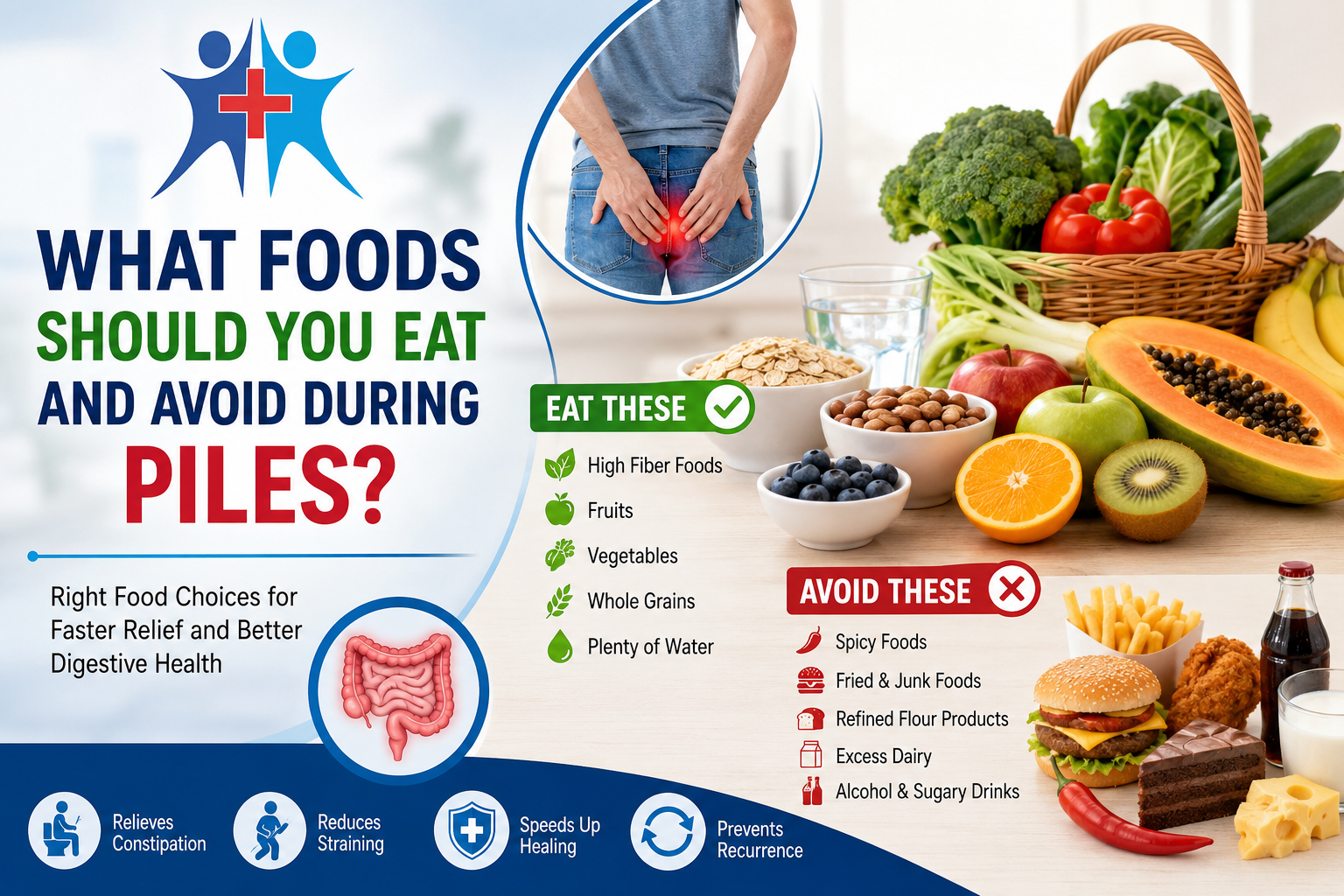
Piles, also known as hemorrhoids, are swollen veins around the anus and lower rectum that can cause pain, itching, bleeding, and discomfort. While medical treatment is important in severe cases, your daily diet plays an equally important role in reducing symptoms and preventing future flare-ups.
Many people unknowingly consume foods that worsen constipation, increase pressure during bowel movements, and delay healing. On the other hand, eating fiber-rich foods and staying hydrated can significantly improve bowel health and reduce piles symptoms naturally.
In this comprehensive guide, you’ll discover the What Foods Should You Eat and Avoid During Piles?dietary tips, and expert advice to help you recover comfortably.
Why Diet Matters During Piles
One of the biggest causes of piles is chronic constipation. Hard stools force excessive straining during bowel movements, putting pressure on the rectal veins. A proper diet softens stools, improves digestion, and minimizes irritation.
A healthy piles-friendly diet helps by:
- Preventing constipation
- Reducing pain during bowel movements
- Supporting faster healing
- Improving gut health
- Preventing piles from recurring
- Reducing inflammation naturally
Good nutrition works alongside medications and lifestyle changes for better long-term relief.
Foods You Should Eat During Piles
Fiber is one of the most effective natural remedies for piles because it adds bulk and softness to stools.
Excellent high-fiber foods include:
- Oats
- Whole wheat bread
- Brown rice
- Barley
- Quinoa
- Bran cereals
These foods improve bowel movement consistency and reduce the need for straining.
Fresh Fruits That Help Reduce Constipation
Fruits contain dietary fiber, antioxidants, vitamins, and plenty of water that support digestive health.
Best fruits for piles include:
- Apples
- Pears
- Papaya
- Oranges
- Bananas
- Guava
- Kiwi
- Figs
- Prunes
- Berries
Papaya and prunes are especially known for improving bowel regularity naturally.
Vegetables That Support Healthy Bowels
Vegetables are rich in insoluble fiber, which helps move waste smoothly through the digestive tract.
Recommended vegetables include:
- Spinach
- Broccoli
- Carrots
- Bottle gourd
- Pumpkin
- Cucumber
- Beetroot
- Sweet potatoes
- Green beans
- Cauliflower
Aim to include vegetables in both lunch and dinner.
Whole Grains Are Better Than Refined Foods
Whole grains retain their natural fiber and nutrients, unlike refined grains.
Choose:
- Brown rice
- Whole wheat chapati
- Multigrain bread
- Millets
- Oats
- Whole grain pasta
These foods help regulate digestion while keeping you fuller for longer.
Legumes and Beans for Better Gut Health
Beans are excellent for both protein and fiber intake.
Healthy choices include:
- Lentils
- Chickpeas
- Kidney beans
- Black beans
- Green gram
- Soybeans
Introduce them gradually if you are not used to eating legumes.
Drink Plenty of Water Every Day
Even a high-fiber diet won’t work effectively without enough water.
Experts generally recommend drinking:
- 8–10 glasses of water daily
- Coconut water
- Lemon water
- Clear soups
- Buttermilk
Proper hydration prevents stools from becoming dry and hard.
Healthy Snacks During Piles
Instead of processed snacks, choose healthier options such as:
- Mixed fruits
- Roasted chickpeas
- Unsalted nuts
- Yogurt
- Sprouts
- Fresh salads
These snacks improve digestion without causing constipation.
Foods You Should Avoid During Piles
Many foods slow digestion, harden stools, or irritate the digestive system.
Reducing these foods can significantly improve recovery.
Spicy Foods
Although spicy food doesn’t directly cause piles, it may increase burning, irritation, and discomfort during bowel movements.
Limit:
- Extra spicy curries
- Hot sauces
- Green chilies
- Red chili powder
- Spicy street food
Processed and Junk Foods
Fast foods are usually low in fiber and high in unhealthy fats.
Avoid:
- Burgers
- Pizza
- French fries
- Instant noodles
- Chips
- Processed frozen foods
These foods often worsen constipation.
Refined Flour Products
Foods made from refined flour have very little fiber.
Reduce consumption of:
- White bread
- Cakes
- Cookies
- Pastries
- White pasta
- Bakery products
Replace them with whole-grain alternatives whenever possible.
Fried Foods
Deep-fried foods are harder to digest and may slow bowel movements.
Examples include:
- Pakoras
- Samosas
- Fried chicken
- Poori
- Fried snacks
Choose baked, steamed, or grilled foods instead.
Excess Dairy Products
Some people experience constipation after consuming excessive dairy.
Limit:
- Full-fat cheese
- Cream
- Ice cream
- Excess milk
- Butter
Low-fat yogurt in moderate amounts is usually easier to digest.
Alcohol and Sugary Drinks
Alcohol and sugary beverages may contribute to dehydration.
Avoid excessive intake of:
- Soft drinks
- Alcohol
- Energy drinks
- Excess packaged juices
Choose fresh fruit-infused water or herbal drinks instead.
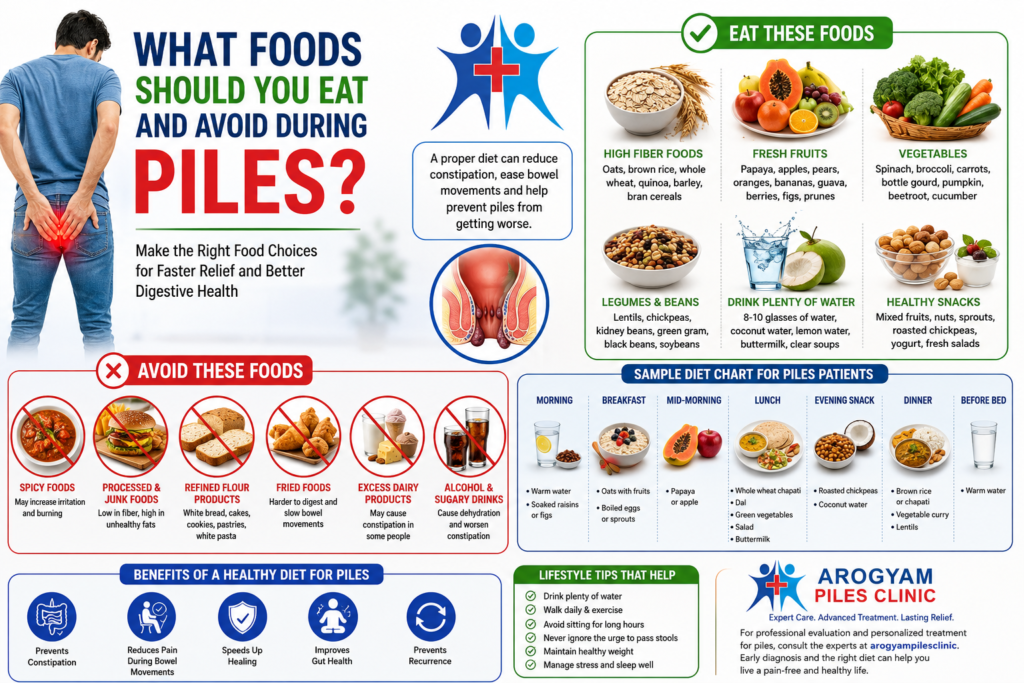
Sample Diet Chart for Piles Patients
Morning
- Warm water
- Soaked raisins or figs
Breakfast
- Oats with fruits
- Boiled eggs or sprouts
Mid-Morning
- Papaya or apple
Lunch
- Whole wheat chapati
- Dal
- Green vegetables
- Salad
- Buttermilk
Evening Snack
- Roasted chickpeas
- Coconut water
Dinner
- Brown rice or chapati
- Vegetable curry
- Lentils
Before Bed
- Warm water
Lifestyle Tips Along with a Healthy Diet
Healthy eating becomes even more effective when combined with better daily habits.
Follow these tips:
- Walk for at least 30 minutes daily.
- Avoid sitting continuously for long periods.
- Never ignore the urge to pass stools.
- Exercise regularly.
- Maintain a healthy weight.
- Avoid excessive straining during bowel movements.
- Sleep for 7–8 hours every night.
- Manage stress through relaxation techniques.
Small lifestyle improvements often make a noticeable difference in recovery.
Common Diet Mistakes People Make During Piles
Many patients unintentionally worsen their condition by following incorrect dietary habits.
Common mistakes include:
- Drinking too little water
- Suddenly consuming excessive fiber without increasing fluids
- Skipping breakfast
- Eating large, heavy meals
- Depending heavily on processed foods
- Ignoring fresh fruits and vegetables
- Eating too many spicy snacks
- Staying physically inactive
Being mindful of these habits can help prevent recurring discomfort.
When Should You See a Specialist?
Although dietary improvements help many people, medical evaluation becomes important if symptoms continue.
Consult a healthcare professional if you experience:
- Frequent rectal bleeding
- Severe pain
- Swelling around the anus
- Persistent constipation
- Piles that do not improve after lifestyle changes
- Recurrent symptoms affecting daily life
Early diagnosis helps prevent complications and allows timely treatment.
Healthy Eating for Piles Starts with the Right Guidance
A balanced diet is one of the most effective ways to manage piles naturally. Choosing fiber-rich foods, drinking enough water, and avoiding constipation-triggering foods can greatly reduce discomfort and improve digestive health. Combined with regular exercise and healthy habits, these dietary changes support faster recovery and lower the chances of recurrence.
For individuals seeking professional evaluation and personalized care, Arogyam Piles Clinic provides expert consultation, accurate diagnosis, and advanced treatment options tailored to each patient’s needs. Early medical advice, combined with healthy nutrition and lifestyle modifications, can help you regain comfort and improve your overall quality of life.
Frequently Asked Questions (FAQs)
1. What are the best foods to eat during piles?
The best foods include high-fiber options such as oats, whole grains, leafy green vegetables, papaya, apples, pears, lentils, beans, and plenty of water. These foods soften stools and reduce constipation, making bowel movements easier.
2. Which foods should be completely avoided during piles?
Avoid spicy foods, deep-fried snacks, processed foods, refined flour products, sugary beverages, alcohol, and excessive dairy if they cause constipation. These foods can worsen piles symptoms and delay recovery.
3. Can diet alone cure piles permanently?
Diet is an essential part of piles management, but it may not completely cure advanced cases. A healthy diet, proper hydration, regular exercise, and timely medical consultation together provide the best results and help prevent recurrence.